The American Naturalist 2026 Student Paper Award is for work that was published in 2025 and that was performed primarily by the first author and primarily while she or he was an undergraduate or graduate student. The Editors of the journal, in consultation with Associate Editors, examine all student-authored papers in the journal to select an outstanding contribution that advances the journal’s goals of changing the way people think about organismal biology (including but not limited to ecology, evolution, and behavior) by providing new conceptual insights.
2026 American Naturalist Student Paper Award
Posted on

Winner:
Fanny Laugier, Kévin Béthune, Florian Plumel, Céline Froissard, Jean-Marc Donnay, Timothée Chenin, François Rousset, and Patrice David. 2025. “Cytoplasmic Male Sterility Declines in the Presence of Resistant Nuclear Backgrounds.” The American Naturalist 206:16–30.
Genetic conflicts within individuals occur when genes have opposing phenotypic effects, such as when mitochondrial genes conflict with nuclear genes. One such conflict, cytoplasmic male sterility, often underlies a key mating system in plants: gynodioecy, in which mitochondrial sterilizing genes produce male-sterile female plants and nuclear genes restore male function and generate hermaphrodites. A rich theoretical literature has modeled the maintenance of genetic variation within populations in the context of cytoplasmic male sterility, but empirical studies have lagged behind theoretical developments. Here, Fanny Laugier and colleagues (2025) conducted an elegant experimental test of the evolution of cytoplasmic male sterility genes and nuclear restorers in Physa acuta, a cosmopolitan freshwater snail in which gynodioecious natural populations were discovered in France. Laugier and colleagues tested predictions generated from the theoretical literature through an innovative design in which they created 14 experimental populations with different starting frequencies of male-sterile vs. male-fertile cytotypes. In advance of the experiment, the authors conducted a series of crosses to ensure that the founding individuals of both cytotypes within each experimental population had the same nuclear background. Laugier et al. monitored mitotype frequency in these populations over 11 generations to estimate selection coefficients, and they collected data on fitness components at generation 6. Concordant with theoretical expectations, the male-sterile cytotype declined in frequency over time and had reduced fitness when restorers of male fertility had high frequency. This demonstration of a cost of cytoplasmic male sterility confirms predictions. The editors of The American Naturalist applaud the novelty of this work, from the compelling research question to the creative experimental design and exciting animal system. This study will propel forward not only the field of cytoplasmic-nuclear conflict but intragenomic conflict more broadly.
Honorable mention:
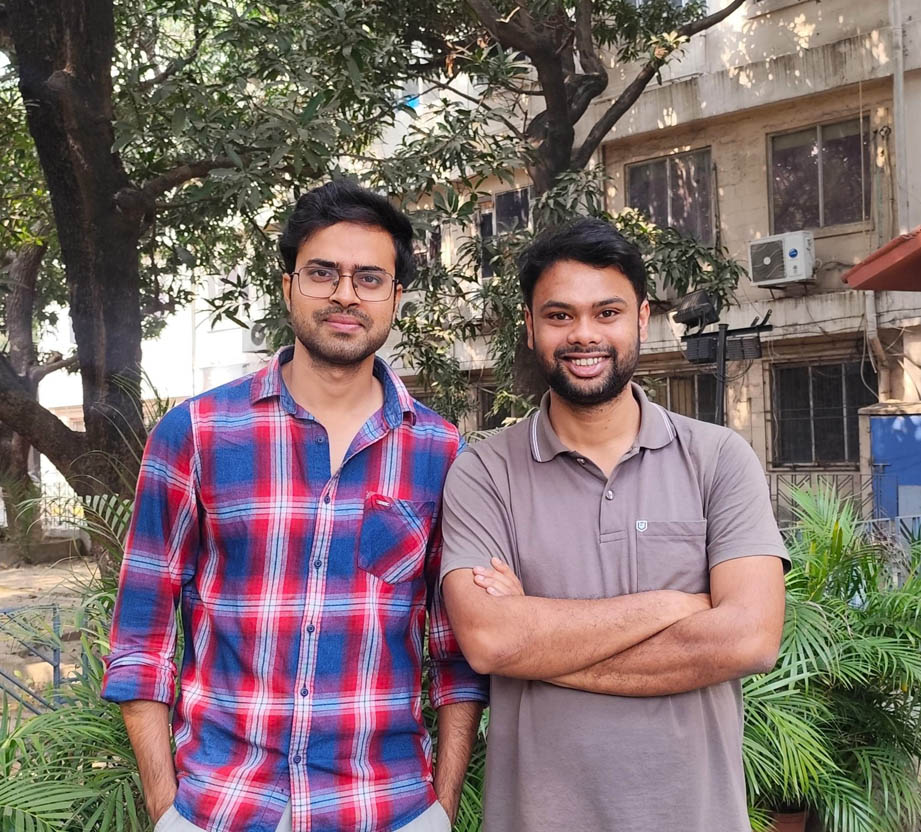
Sagar Karmakar,* Amit Samadder,* and Joydev Chattopadhyay. 2025. “Investigating Tipping and Its Predictability in Noisy Environments: Evaluating the Impact of Temporal and Species Response Correlation.” The American Naturalist 206:E63–E77.
Ecological systems can undergo sudden transitions, known as “catastrophic regime shifts,” with potentially significant impacts on population dynamics or abundance. It is well appreciated that, in single-species systems, such transitions can be triggered by environmental fluctuations, a phenomenon known as “noise-induced tipping.” But what happens in multispecies communities, where species can respond in different ways to the environment? The authors used simple conceptual models to investigate the joint effect of correlations in species responses and environmental fluctuations on the stability of ecological systems and the potential for catastrophic regime shift. They demonstrate that positive correlations in species response generally delay the onset of tipping and affect the reliability of early warning signals for predicting sudden ecological changes. This is a great example of how theoretical models can be used to shed light on general conceptual questions, generate potentially testable predictions, and open new perspectives for further investigation of more complex systems. The Editors were also impressed by the quality of the writing and figures, which allowed the authors to present difficult theory using intuitive examples or explanations that most readers will be able to understand.
*Note: Both Sagar Karmakar and Amit Samadder are students.